


Conization
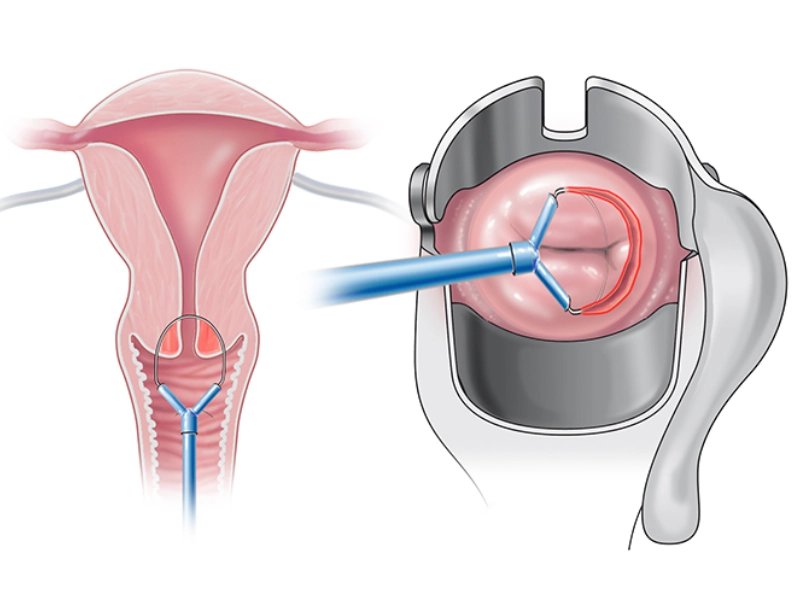
Conization is the procedure of removing a cone-shaped piece of tissue from the cervix. This surgical method is usually applied for the diagnosis and treatment of cellular changes following an abnormal smear result or HPV positivity. Conization is both a diagnostic (biopsy) and therapeutic procedure. It ensures the complete removal of early-stage cervical cancer precursor lesions. ⚕️
What is Conization?
Conization (cervical cone biopsy) is the procedure of removing the area with abnormal cells in the cervix in a cone shape. The removed tissue is examined pathologically, and the degree of cell change (dysplasia or cancer precursor lesion) is determined. This method is particularly applied to women who have a “HSIL, ASC-H” in their smear test or a suspicious area detected during colposcopy. 🌿
How is Conization Performed?
The procedure is usually performed under general or local anesthesia on a gynecological table. A speculum is placed in the vagina, and the cervix is made visible. Then, with special surgical techniques (using electric energy, laser, or scalpel), a cone-shaped tissue is removed. The procedure takes about 15–20 minutes. The tissue is sent to pathology, and results are obtained within a few days. 🤺
Conization Methods
Conization can be performed using different surgical techniques:
• LEEP (Loop Electrosurgical Excision Procedure): An abnormal tissue is cut and removed using a thin wire loop heated by electric current. It is the most commonly used method.
• Classical Scalpel Conization: It is an incision made with a surgical scalpel. It is preferred for deeper or widespread lesions.
• Laser Conization: Tissues are vaporized or cut with laser energy. The risk of bleeding is low.
The method to be chosen is determined according to the depth of the lesion, the patient’s age, and fertility desire. 🌸
When is Conization Performed?
Conization is generally used for the diagnosis and treatment of early-stage precursors of cervical cancer. It is recommended in the following situations:
• High-grade cellular abnormality (HSIL, ASC-H, CIN 2–3) in the smear test
• HPV 16–18 positivity and abnormal smear result
• Detection of suspicious areas in colposcopy
• Finding “high-grade dysplasia” in biopsy
• Suspicion of early-stage cervical cancer
Conization provides treatment before progressing to cervical cancer thanks to early diagnosis. 📋
Post-Conization Process
After the procedure, you can usually return home the same day. Mild vaginal discharge or pink spotting may last 7–10 days. During this period:
• Sexual intercourse should be avoided for 3–4 weeks.
• Vaginal douching or tampon use should be avoided.
• Avoid heavy exercise and lifting.
• Take antibiotics or painkillers as recommended by the doctor.
Stitches usually dissolve on their own, and healing is completed within 3–4 weeks. ✅
Conization Results and Follow-Up
A treatment plan is made according to the pathology result. If there is clear margin in the removed tissue, no additional procedure is needed. However, if the lesion remains at the margin, re-conization or further surgery may be required. Patients are usually checked with a smear and HPV test 6 months later. 🌼
Effect of Conization on Fertility
Since the cervix is preserved after conization, fertility usually continues. However, in patients where very deep tissue is removed, the risk of cervical insufficiency may slightly increase. Therefore, surgery is carefully planned in women planning pregnancy. 🤰
Advantages of Conization
• Treats early-stage cervical diseases
• The uterus is preserved, fertility continues
• The procedure is short and does not require hospitalization
• Provides definitive diagnosis with pathological examination
• Low recurrence rate 🌿
| Method | Technique | Advantage |
|---|---|---|
| LEEP | Tissue cutting with electric loop | Less bleeding, fast healing |
| Classical Scalpel Conization | With surgical scalpel | Effective in wide or deep lesions |
| Laser Conization | With laser energy | Bloodless, precise procedure |
Conization Prices
Conization prices vary according to the method to be applied (LEEP, laser, classical), type of anesthesia, and pathology examination. The most suitable treatment plan and fee information are determined after personal evaluation. For detailed information, please contact our clinic. 📞
Conclusion: Conization is one of the most effective ways of early diagnosis and treatment in cervical diseases. When applied with the correct indication, it provides both diagnosis and treatment, eliminating the risk of cervical cancer. Together with regular smear and HPV tests, it is a protective approach for women’s health. 💝
Frequently Asked Questions About Conization
Question: Is the conization procedure painful?
No. The procedure is usually performed under anesthesia, and mild pain passes within a few days afterward. ✅
Question: Will there be menstrual irregularity after conization?
The first period may be slightly different, but the cycle returns to normal afterward. 🌸
Question: Can I get pregnant after conization?
Yes. The cervix is preserved, and pregnancy is possible. Only after very deep procedures, the risk of cervical insufficiency may increase. 🤰
Question: Is it necessary to have a smear test again after conization?
Yes. It is recommended to have a smear and HPV test 6 months after the procedure. 📅


