


Endometrial Ablation
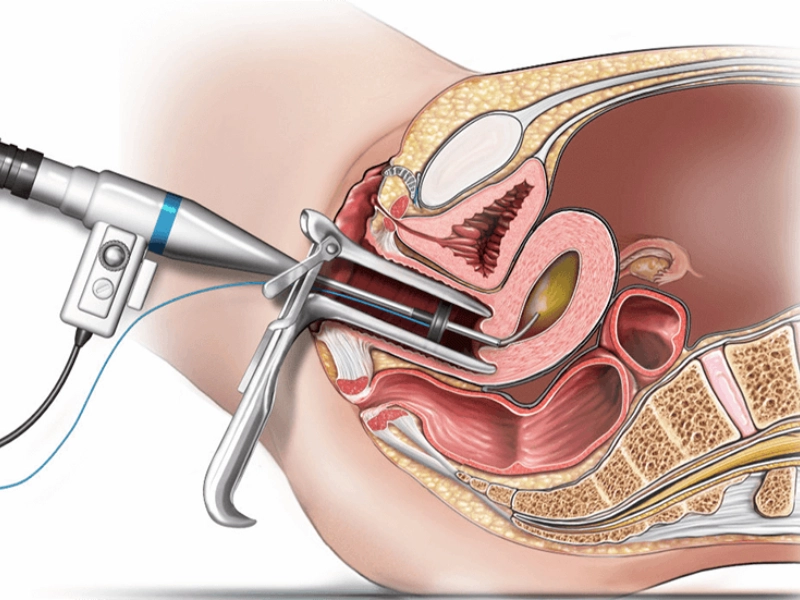
Endometrial Ablation is a modern surgical method applied to treat excessive menstrual bleeding (menorrhagia) by controlled destruction of the uterine lining (endometrium). It aims to permanently reduce or stop bleeding problems without removing the uterus. It is especially preferred for women who have completed their fertility and can be performed quickly without requiring surgery. ⚕️
What is Endometrial Ablation?
Endometrial ablative treatment is the process of removing the tissue causing menstrual bleeding by burning the inner surface of the uterus using high heat, electrical energy, fluid, microwave, or radiofrequency methods. This procedure preserves the uterus, but the menstrual cycle may significantly decrease or completely cease. It is used as an alternative to hysterectomy (uterus removal surgery) in cases of excessive bleeding unresponsive to medication. 🌿
How is Endometrial Ablation Performed?
The procedure is usually performed with hysteroscopy. The endometrial layer is burned or vaporized through a thin device advanced into the uterus from the vagina. Different techniques are available depending on the type of energy used: thermal balloon, bipolar energy, radiofrequency, or microwave. The procedure takes 10–15 minutes and is usually performed under general or local anesthesia. The patient can be discharged on the same day. 🤺
When is Endometrial Ablation Performed?
This method is suitable for women who have completed their fertility and do not benefit from medication treatment. It is especially preferred in the following situations:
• Excessive and prolonged menstrual bleeding (menorrhagia)
• Clotted and painful bleeding during menstruation
• Intense bleeding leading to anemia
• Conditions unresponsive to hormone therapy
• Superficial thickenings affecting the uterine lining (endometrial hyperplasia – benign type)
It is not applied to women who desire pregnancy because the uterine lining cannot become suitable for pregnancy after the procedure. 📋
Endometrial Ablation Methods
Different ablation techniques have been developed based on the technology used in the application:
• Thermal balloon ablation: A balloon placed inside the uterus is inflated with hot fluid and burns the endometrium.
• Radiofrequency ablation: Tissue is destroyed by delivering radiofrequency energy with a special electrode device.
• Microwave ablation: The uterine lining is heated and destroyed using microwave energy.
• Cryoablation: Endometrial cells are destroyed by freezing.
• Hysteroscopic resectoscopy: The layer is scraped with electrical current under direct vision.
All these methods serve the same purpose: to permanently remove the tissue causing excessive bleeding. ⚡
Preparation Before Endometrial Ablation
Before the procedure, ultrasound and, if necessary, biopsy are performed to evaluate the thickness of the uterine lining. In some cases, short-term hormone therapy may be applied to thin the endometrium. The patient is usually discharged on the day of the procedure, and hospitalization is not required. 🌸
Post-Endometrial Ablation Process
After the procedure, mild cramps, watery vaginal discharge, or spotting may last for a few days. Complaints usually disappear within 1 week. Menstrual bleeding significantly decreases in the first few weeks and may stop completely over time. Sexual intercourse and tampon use should be postponed for 1–2 weeks. 🤹
Effects on Fertility and Pregnancy
After endometrial ablation, the uterine lining does not regenerate; therefore, the likelihood of pregnancy is quite low. However, pregnancy can occur rarely and carries high risks. Therefore, the use of birth control methods (IUD, tubal ligation, etc.) is recommended after the procedure. 🤰🚫
Advantages of Endometrial Ablation
• Provides treatment for excessive bleeding without removing the uterus
• Can be performed quickly, no hospitalization required
• Recovery time is fast (1–2 days)
• Requires minimal anesthesia
• Does not cause hormonal side effects
• Does not negatively affect sexual life 🌿
| Method | Type of Energy | Advantage |
|---|---|---|
| Thermal Balloon | Hot fluid | Uniform effect on a wide surface, safe |
| Radiofrequency | Heat energy | Fast and effective |
| Microwave | Electromagnetic wave | Short application time |
| Cryoablation | Cooling / freezing | Minimal pain and sensitivity |
Endometrial Ablation Prices
Endometrial ablation prices vary depending on the technology used (thermal, radiofrequency, microwave, etc.), hospital conditions, and type of anesthesia. Since the procedure is planned individually, a clear price assessment is made after the examination. For current information, please contact our clinic. 📞
Conclusion: Endometrial ablation is an effective, safe, and comfortable option for treating excessive menstrual bleeding without removing the uterus. With proper patient selection and experienced application, long-term relief can be achieved. Its short recovery time and high success rate have made this method an important alternative in modern gynecology. 💝
Frequently Asked Questions About Endometrial Ablation
Question: Does menstruation completely stop after endometrial ablation?
In about half of the women, menstruation completely stops, while a significant reduction is observed in the other half. ✅
Question: Is the procedure painful?
No. It is usually performed under mild anesthesia, and post-procedure pain is minimal. 🌸
Question: How soon can one return to work after the procedure?
Normal activities can usually be resumed the next day. 🤹
Question: Can one become pregnant after endometrial ablation?
Theoretically, it is possible but rare, and pregnancy is risky. Therefore, birth control is recommended. 🚫🤰


